Three Categories That the Industry Has Every Incentive to Conflate
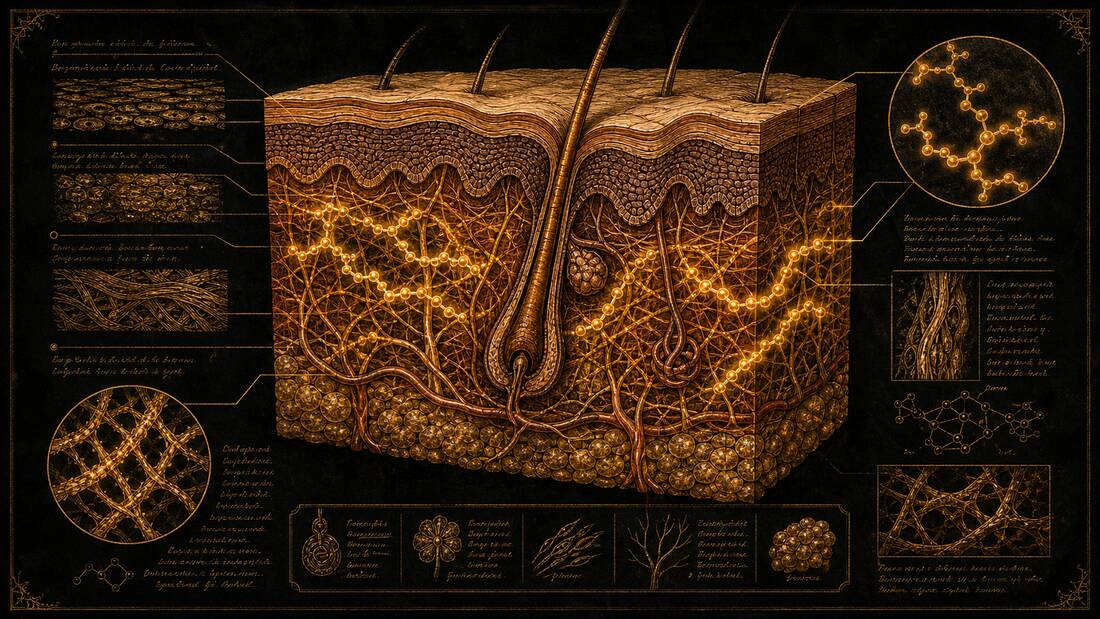
The skin peptide market exists in three distinct layers. The industry profits from keeping those layers indistinguishable.
Layer one: cosmetic peptides — synthetic signal molecules embedded in moisturizers and serums at concentrations determined by cost, not efficacy. Layer two: GHK-Cu (copper peptide glycyl-L-histidyl-L-lysine:Cu2+), a naturally occurring tripeptide-copper complex with a legitimate wound healing and tissue remodeling literature behind it. Layer three: oral collagen peptides — hydrolyzed collagen fragments marketed as skin-targeting nutraceuticals, supported by some human trial data and a great deal of extrapolation.
These three things are not the same thing. They do not work by the same mechanisms. The evidence supporting them ranges from reasonably credible to aggressively overstated. A practitioner who wants to think clearly about skin peptides has to separate them before evaluating any of them.
That is what this article does.
Source transparency: this primer is not derived from a strong community-data pull. The pipeline found one usable-looking source and it was mostly off-topic, so the claims below are anchored to published literature and internal CultOfPeptides context rather than Reddit consensus or practitioner anecdotes.
What a Peptide Actually Is in This Context
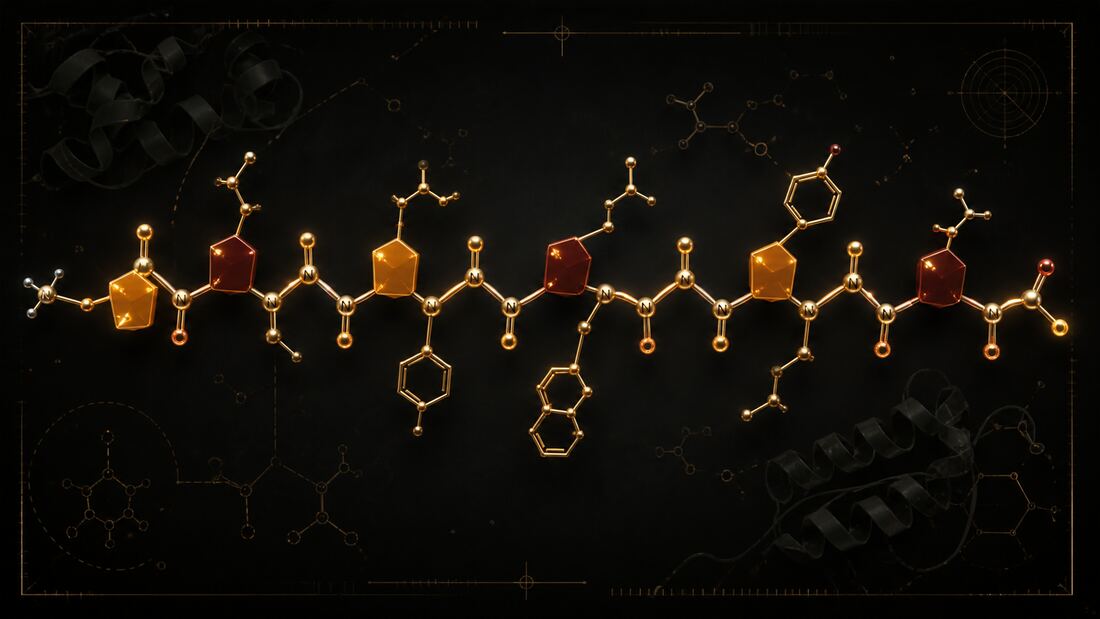
A peptide is a short chain of amino acids — fewer than 50 residues by most definitions — linked by peptide bonds. In skin biology, peptides function primarily as signaling molecules. The skin produces and responds to endogenous peptides across the entire wound healing and tissue remodeling cascade: inflammation, proliferation, remodeling. When peptide researchers or cosmetic formulators introduce exogenous peptides into this system, the implicit claim is that the introduced molecule will interact with that system in a meaningful way.
If you’re new to peptide terminology more broadly, What Are Peptides? A Plain-English Beginner Guide (2026) covers the foundational biology without the marketing overlay.
The operative word in any skin peptide evaluation is meaningful. Meaning: at what concentration, via what route, reaching what receptor or binding site, producing what measurable change in what tissue? The cosmetic industry is comfortable leaving those questions unanswered because, legally, it has to be. A cosmetic cannot claim to change skin structure. A drug can. The moment a topical peptide product demonstrates that it meaningfully alters dermal architecture, it crosses from cosmetic to drug territory and requires FDA approval.
That regulatory line is not a technicality. It is the frame around this entire conversation.
Cosmetic Peptides: What the Formulations Actually Contain

The most widely marketed cosmetic peptides — Matrixyl (palmitoyl pentapeptide-4), Argireline (acetyl hexapeptide-3), and a range of copper peptide complexes — have in common that they were designed to be stable in cosmetic formulations, penetrate the stratum corneum to some degree, and produce measurable effects in cell culture or ex vivo models.
Matrixyl (Palmitoyl Pentapeptide-4)
Matrixyl is a synthetic peptide derived from a procollagen sequence. The mechanism claim: it acts as a matrikine — a fragment of an extracellular matrix protein that signals fibroblasts to produce more collagen when the matrix breaks down. The base KTTKS evidence is older and narrower than most cosmetic marketing implies: Katayama et al. reported in Journal of Biological Chemistry in 1993 that the pentapeptide Lys-Thr-Thr-Lys-Ser was the minimum sequence they identified for stimulating collagen and fibronectin production in mesenchymal cell cultures (DOI: 10.1016/S0021-9258(18)82153-6).
A 2005 randomized, split-face, double-blind study published in the International Journal of Cosmetic Science by Robinson et al. tested a moisturizer containing 3 ppm palmitoyl-KTTKS against the same moisturizer base without the peptide in 93 women aged 35-55 (PMID: 18492182; DOI: 10.1111/j.1467-2494.2005.00261.x). The study reported statistically significant wrinkle/fine-line improvements versus the control side at 12 weeks. The effect size was modest, the work was industry-linked, and the comparator was a base formulation without peptides — a standard but imperfect design.
What that evidence actually supports: there is a plausible mechanism and at least one small industry-funded RCT showing modest, measurable effects. It does not support language like “clinically proven to reverse aging.” The peptide concentration used in the study may differ from concentrations in commercially available products, and the study authors do not specify commercial formulations.
Argireline (Acetyl Hexapeptide-3)
Argireline is designed to mimic part of the SNAP-25 protein and interfere with the SNARE complex — the same complex that botulinum toxin disrupts, but through a different and substantially weaker mechanism. The marketing language around Argireline frequently invokes the botulinum toxin comparison. The evidence does not support that comparison at any realistic topical concentration.
A 2002 paper by Blanes-Mira et al. in International Journal of Cosmetic Science reported SNARE-complex interference and neurotransmitter-release inhibition, plus a small skin-topography component using an emulsion containing 10% acetyl hexapeptide-3 over 30 days (PMID: 18498523; DOI: 10.1046/j.1467-2494.2002.00153.x). That concentration is high for a commercial product, and the study was not independently replicated at the same evidentiary level.
The mechanism is coherent. The human evidence is thin. The botulinum toxin comparison is marketing.
The Penetration Problem
All cosmetic peptides share a common limiting factor: the stratum corneum. This outermost layer of skin is an effective barrier against molecules above approximately 500 daltons. Most peptides are above this threshold. Cosmetic chemists address this through lipophilic conjugation (the palmitoyl group in Matrixyl is an example), encapsulation, and carrier systems. These strategies improve penetration relative to unconjugated peptides. Whether they achieve the dermal concentrations necessary to produce the effects demonstrated in in vitro models is, for most marketed peptides, unresolved.
This is not a reason to dismiss topical peptides. It is a reason to weight in vitro data appropriately and to read clinical claims critically.
GHK-Cu: The Molecule With an Actual Literature
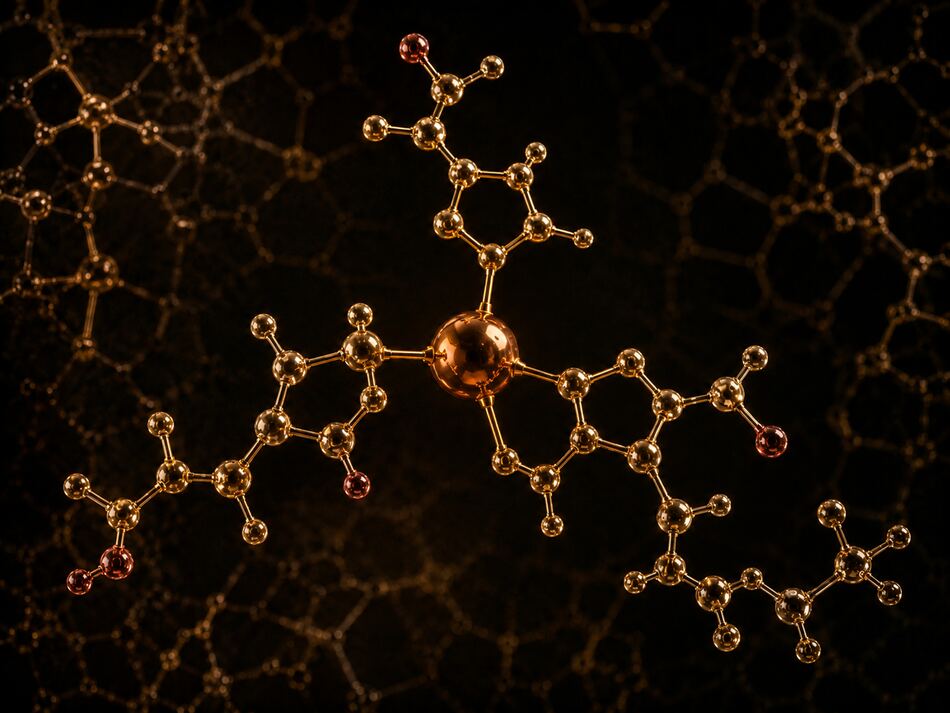
GHK-Cu occupies a different evidentiary position than Matrixyl or Argireline. This is not because it is better-marketed. It is because Loren Pickart began characterizing it in the 1970s, and the research literature — including wound healing studies, inflammatory modulation data, and gene expression work — has accumulated across five decades.
What the Wound Healing Literature Shows
The wound healing evidence for GHK-Cu is primarily in animal models, in vitro work, and wound-care contexts rather than cosmetic anti-aging trials. Pickart and Margolina’s 2018 International Journal of Molecular Sciences review summarizes regenerative and protective gene-data claims, but it is a review, not a human cosmetic RCT (PMID: 29986520). A 1994 Wound Repair and Regeneration trial by Mulder et al. evaluated a GHK-Cu topical treatment in diabetic neuropathic ulcers and reported enhanced healing versus placebo/control treatment in that specific wound-care population (PMID: 17147644; DOI: 10.1046/j.1524-475X.1994.20406.x).
The non-topical GHK-Cu literature is where the mechanistic work is clearest. Animal and cell-model work is repeatedly cited for wound-healing parameters that topical cosmetic use does not automatically replicate — for the same penetration reasons that limit other topical peptides.
I covered the topical versus non-topical bioavailability question in detail in the GHK-Cu Field Report: Topical vs. Injectable Bioavailability. The short version: topical GHK-Cu has evidence for surface-level and wound-context effects; deeper dermal-remodeling claims should not be imported from animal or cell-model evidence without route-specific evidence.
What the Gene Expression Data Shows
Pickart, Vasquez-Soltero, and Margolina reviewed GHK-Cu gene-expression findings in Oxidative Medicine and Cellular Longevity in 2012 (PMID: 22666519), and later GHK/gene-expression review work continued in 2014 and 2018. Those papers are useful for mechanism framing, but they are not clinical trials of anti-aging efficacy in human skin. Treat them as mechanistic context, not outcome proof.
The Regulatory Position
GHK-Cu occupies an unusual regulatory position in the United States. As a research peptide in injectable form, it sits in the same space as other compoundable peptides — the landscape I described in Peptides Are Legal. Here’s What Actually Matters Now.. As a cosmetic ingredient, it is legal in topical formulations and widely available. The evidentiary standards differ significantly between those two contexts, and the molecule is often discussed as though those contexts are interchangeable. They are not.
Oral Collagen Peptides: A Different Mechanism Entirely
Oral collagen peptides — hydrolyzed collagen sold as powders and capsules — belong in a separate category because the proposed mechanism is entirely different from topical signal peptides.
The claim is not that whole collagen reaches the skin intact and stimulates local fibroblasts. The evidence does not support that mechanism. Collagen is digested in the GI tract. The proposed mechanism for oral collagen is indirect: specific hydrolyzed collagen fragments, including Pro-Hyp and Gly-Pro-Hyp-related fragments, appear in circulation after ingestion. A 2017 Journal of Agricultural and Food Chemistry paper by Yazaki et al. reported Gly-Pro-Hyp and Pro-Hyp-related transport into blood and skin in a mouse model after oral collagen hydrolysate, while human evidence is stronger for circulating fragments than for direct skin deposition (PMID: 28244315; DOI: 10.1021/acs.jafc.6b05679).
What the Human Trial Data Shows
A 2014 randomized, double-blind, placebo-controlled trial by Proksch et al. published in Skin Pharmacology and Physiology enrolled 69 women aged 35–55 and administered 2.5g or 5g of collagen hydrolysate (or placebo) daily for 8 weeks. Skin elasticity improved significantly in the collagen groups versus placebo at 4 and 8 weeks. The effect was more pronounced in older participants.
A second Proksch-group 2014 paper in Skin Pharmacology and Physiology randomized 114 women aged 45-65 to 2.5 g/day of specific bioactive collagen peptides or placebo for 8 weeks and reported reduced eye-wrinkle volume plus increased markers of dermal matrix synthesis in a subgroup analysis (PMID: 24401291; DOI: 10.1159/000355523).
These are small industry-affiliated trials measuring surrogate endpoints with instruments that have their own limitations. They are not definitive. But they are placebo-controlled human data — a level of evidence that most topical cosmetic peptides cannot claim.
What They Cannot Show
Oral collagen peptides cannot currently demonstrate which fragment is responsible for the observed effects, whether the effect scales with dose above the studied range, or whether the mechanism is collagen-specific or attributable to the amino acid profile (glycine, proline, hydroxyproline) that could be delivered by other high-quality protein sources. The distinction between “collagen-specific signaling effect” and “proline and glycine substrate effect from an abundant dietary protein source” is unresolved in the literature.
This matters for practitioners deciding whether the cost differential between collagen peptide products and high-quality protein sources is justified by evidence. Currently, the evidence does not resolve that question.
What These Three Categories Have in Common (and What They Don’t)
All three categories invoke “peptides” as a unifying concept. That is where the similarities end.
| Category | Mechanism | Best Evidence Level | Human RCT Data? |
|---|---|---|---|
| Cosmetic peptides (Matrixyl, Argireline) | Topical signaling | In vitro + small industry RCTs | Yes, limited |
| GHK-Cu (topical) | Wound healing signaling, antioxidant | Animal models + small human wound studies | Sparse |
| GHK-Cu (injectable/subcutaneous) | Systemic tissue remodeling | Animal models + in vitro gene expression | No |
| Oral collagen peptides | Indirect — systemic circulation → fibroblast signaling | Small human RCTs (placebo-controlled) | Yes, limited |
The practitioner error is treating these as a single category because they share a label. A 2014 placebo-controlled trial on oral collagen hydrolysate does not validate GHK-Cu non-topical use. A rat wound model on GHK-Cu does not validate the Matrixyl serum on a Sephora shelf. Each category requires evaluation against its own evidence base.
What Practitioners Are Actually Asking

Q: Is the GHK-Cu in cosmetic serums the same molecule as research-grade GHK-Cu?
The molecule is the same — glycyl-L-histidyl-L-lysine complexed with copper(II). The differences are concentration, formulation, and route. A cosmetic serum operates within cosmetic regulatory constraints; the concentration may be too low to replicate effects observed in research settings, and topical application cannot deliver the systemic exposure that animal model data is based on. Same molecule, meaningfully different context.
Q: Are the concentrations of cosmetic peptides in over-the-counter products sufficient to do anything?
Honestly: often unknown. Most manufacturers treat concentration as proprietary. The studies that exist — including the Robinson et al. (2005) palmitoyl-KTTKS split-face trial — used specific formulations that may not correspond to what is commercially available. The penetration barrier problem compounds this. Without disclosed concentration, vehicle, and penetration data, the claim is hard to audit from the label alone.
Q: How does the evidence for skin peptides compare to retinoids?
Retinoids, particularly tretinoin (retinoic acid), have decades of randomized controlled trial data, known mechanisms of action at the nuclear receptor level, and established clinical use for photoaging that has survived regulatory scrutiny. The evidence base for topical peptides at any concentration does not approach the retinoid literature. This is not an argument against peptides; it is a calibration point for comparing evidence quality across categories.
Q: Do oral collagen peptides actually reach the skin?
Partly, but the evidence needs careful wording. Pro-Hyp and related fragments have been detected in human blood after gelatin/collagen hydrolysate ingestion (for example, Iwai et al., Journal of Agricultural and Food Chemistry, 2005; PMID: 16076145). Yazaki et al. later reported Gly-Pro-Hyp and Pro-Hyp-related transport into blood and skin in a mouse model after oral collagen hydrolysate (PMID: 28244315). Whether the concentrations that reach skin tissue explain the effects observed in human trials remains an active question.
Q: Is this conversation relevant to practitioners primarily interested in research peptides for systemic use?
The overlap is GHK-Cu. If you are evaluating GHK-Cu outside a cosmetic-serum context, the cosmetic literature is not the relevant evidence base — it will mislead you in both directions, either inflating expectations or making the molecule seem weaker than the wound healing literature suggests. Read the wound healing and gene-expression literature on its own terms. The GHK-Cu Field Report covers the bioavailability question directly.
The skin peptide conversation is not going to get simpler. The cosmetic industry has a structural incentive to keep these categories blurred, because “clinically-inspired peptide technology” sells serum at a price point that “moisturizer with proline-rich oligopeptides” does not. What a practitioner can do is hold the categories separate and evaluate the evidence at the level it was actually generated. A rat wound model. A small industry-funded split-face study. A placebo-controlled trial with ultrasound endpoints. Each of those is real information. None of them is a mandate. Read them as what they are.
Selected Source Ledger
- Katayama et al. 1993, Journal of Biological Chemistry: KTTKS minimum-sequence extracellular-matrix cell-culture work. DOI: 10.1016/S0021-9258(18)82153-6.
- Robinson et al. 2005, International Journal of Cosmetic Science: 93-woman palmitoyl-KTTKS split-face trial. PMID: 18492182.
- Blanes-Mira et al. 2002, International Journal of Cosmetic Science: acetyl hexapeptide-3 mechanism and small skin-topography component. PMID: 18498523.
- Mulder et al. 1994, Wound Repair and Regeneration: GHK-Cu diabetic ulcer wound-care study. PMID: 17147644.
- Pickart et al. 2012, Oxidative Medicine and Cellular Longevity: GHK-Cu mechanism/gene-expression review. PMID: 22666519.
- Pickart and Margolina 2018, International Journal of Molecular Sciences: GHK-Cu regenerative/protective gene-data review. PMID: 29986520.
- Proksch et al. 2014, Skin Pharmacology and Physiology: 69-woman collagen hydrolysate elasticity trial. PMID: 23949208.
- Proksch et al. 2014, Skin Pharmacology and Physiology: 114-woman bioactive collagen peptide wrinkle/dermal-matrix trial. PMID: 24401291.
- Choi et al. 2019, Journal of Drugs in Dermatology: oral collagen systematic review of 11 RCTs. PMID: 30681787.
- Yazaki et al. 2017, Journal of Agricultural and Food Chemistry: Gly-Pro-Hyp/Pro-Hyp-related transport into blood and skin model. PMID: 28244315.